What is an indicator?
An indicator is a helper substance that changes color depending on the solution around it. When you add a few drops to a solution, the color shows whether the solution is acidic, neutral, or basic. The color change comes from the indicator itself, not from the acid or base. When an indicator molecule gains or loses an H+ ion, its structure changes, and it takes on a different color.
Indicator color chart
The colors in this chart match the ones in the simulator.
| Indicator | Acid | Neutral | Base |
|---|---|---|---|
| Litmus | red | purple | blue |
| Universal indicator | red | green | purple |
| Phenolphthalein | colorless | colorless | pink |
How are the three indicators different?
- Litmus is a natural dye extracted from lichens. In the lab, it is used as paper: blue litmus paper turns red in acid, and red litmus paper turns blue in base. If neither paper changes color, the solution is neutral.
- Universal indicator is a mixture of several indicators. It gives a different color at each pH, so it shows how acidic a solution is.
- Phenolphthalein cannot tell an acid from a neutral solution. But it changes sharply from colorless to pink, so it is used in titration.
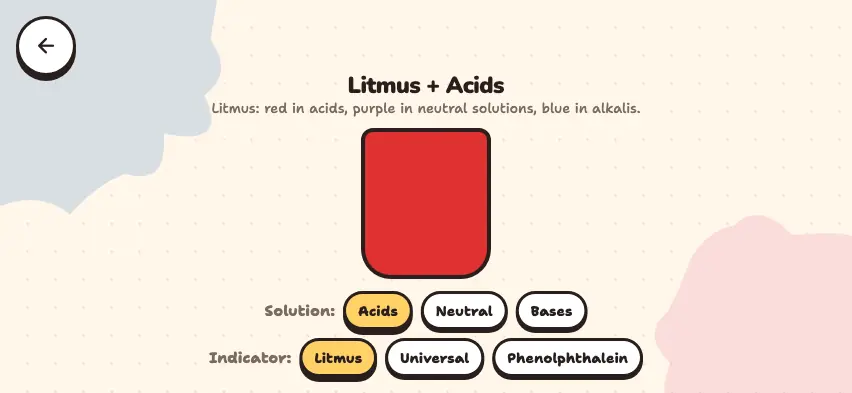
Check indicator colors in the Nalukh chem app
The simulator is free and needs no sign-up.
How do you use the simulator?
- In the Solution: row, choose one of three: Acids, Neutral, or Bases.
- In the Indicator: row, choose one of three: Litmus, Universal, or Phenolphthalein.
- The color in the glass changes right away. The names of the indicator and the solution appear at the top, with a short explanation of the indicator below them.
- Test one indicator in each of the three solutions, and compare the colors with the chart.
Tasks to try in the simulator
- Without looking at the chart, write the 9 colors of the three indicators in your notebook. Then check them in the simulator.
- Which indicator cannot tell an acid from a neutral solution? Answer: Phenolphthalein. It is colorless in both.
- Which one indicator would you choose to find out whether a solution is acidic, neutral, or basic? Answer: Litmus or universal indicator, because each gives three different colors in the three solutions.
Indicators in everyday life
Indicators exist in nature too. Red cabbage juice is purple. It turns pink-red when you add lemon juice and green-blue when you add baking soda. These colors come from a substance called anthocyanin. To see how indicator colors relate to pH, read the acidic and basic properties article.